Open Textbook Pilot Grant Program Funded for 2026
Congress has renewed funding for the Open Textbook Pilot in Fiscal Year 2026, allocating $7 million to be distributed by the U.S. Department of Education. The Open Textbook Pilot is a federal grant program that supports the creation and expanded use of open textbooks to save college students money and improve learning outcomes. Since 2018, it has invested $54 million in grants projected to save students more than $250 million—a nearly fivefold return on taxpayer investment.
The program is championed by Senator Dick Durbin (D-IL) and Representative Joe Neguse (D-CO), with advocacy led by SPARC and the Student PIRGs. "With the rising cost of tuition, many students decline to purchase required textbooks for their coursework due to the outrageous expense," said Senator Durbin in a press release celebrating the funding. "Open textbooks are a proven way to save students money while providing quality instructional materials."
Past projects funded by the Open Textbook Pilot include:
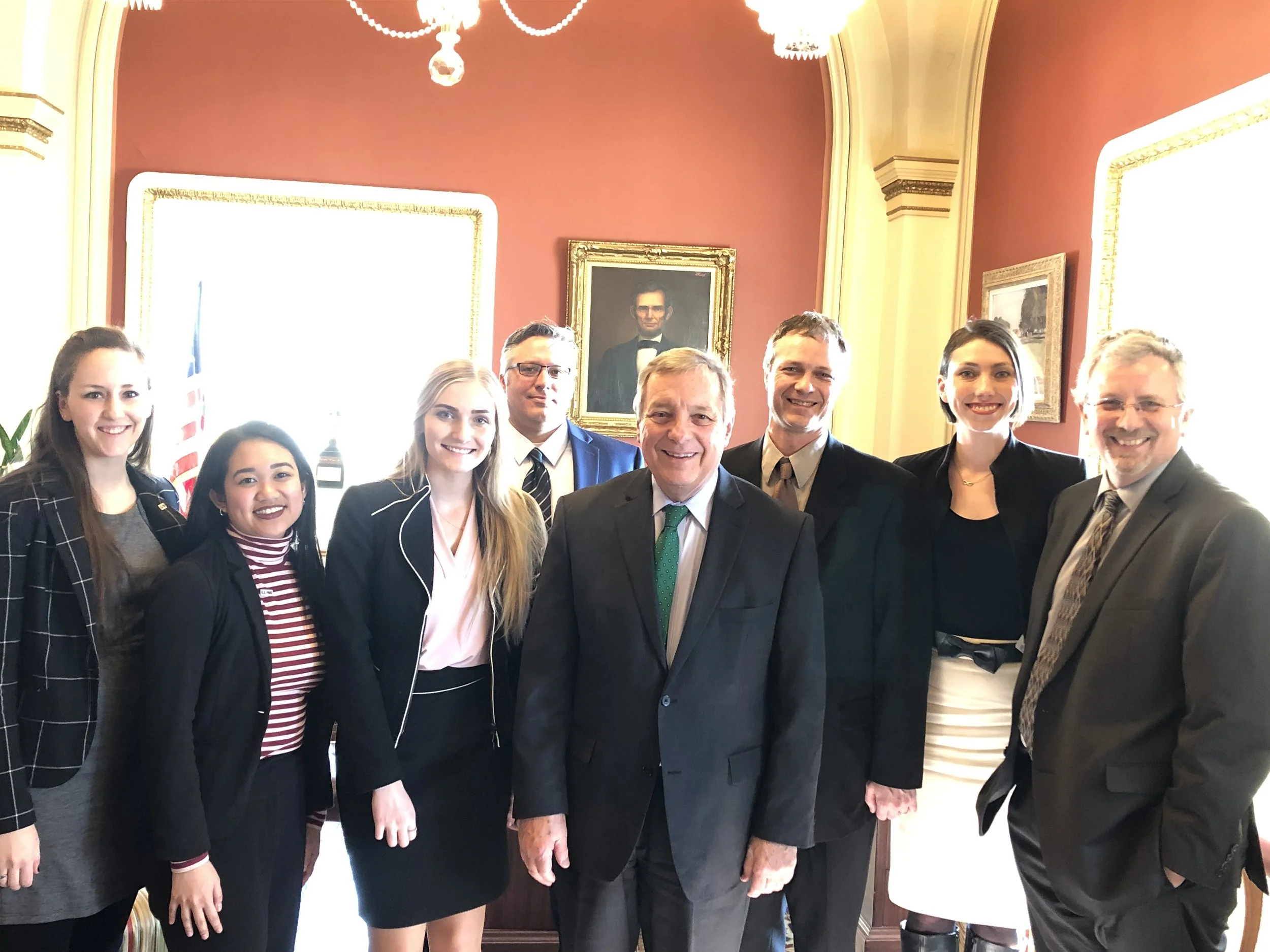
Open education advocates meet with Senator Dick Durbin (center) in 2019 to discuss the impact of the Open Textbook Pilot grant program.
Open RN (Wisconsin), which was originally funded to develop five open nursing textbooks, and has since expanded to include a wide range of openly-licensed texts, simulations, and virtual reality scenario plans.
Open ProfTech (Washington), which is developing high-quality open textbooks for the in-demand professional and technical programs such as welding, hospitality, and criminal justice.
Interactive OER for Dual Enrollment (Louisiana), which leverages free OER and interactive quiz and assessment elements to enhance postsecondary opportunities for high school students across the state and nationally.
For those interested in applying for the 2026 funding cycle, applications have typically opened in late spring or early summer. However, the program is subject to a new interagency agreement between the Departments of Education and Labor, so it is difficult to predict this year’s process and timeline. Under the program’s existing requirements, grants range from $500,000 to $2 million and must be submitted by a consortium of at least three higher education institutions. Projects should focus on student success, use of technology, and filling gaps in the open textbook landscape.
The Open Textbook Pilot must be renewed by Congress annually. To permanently authorize the program, lawmakers have proposed the Affordable College Textbook Act, a bill that would also strengthen textbook transparency requirements and increase student protections. While Congress is not slated to take up major higher education reforms this year, passing this bill remains a top priority for the open education field.
For news about the Open Textbook Pilot, watch the Federal Register and sign up for our newsletter for more updates.