News

Member Spotlight Dani Nicholson Member Spotlight Dani Nicholson

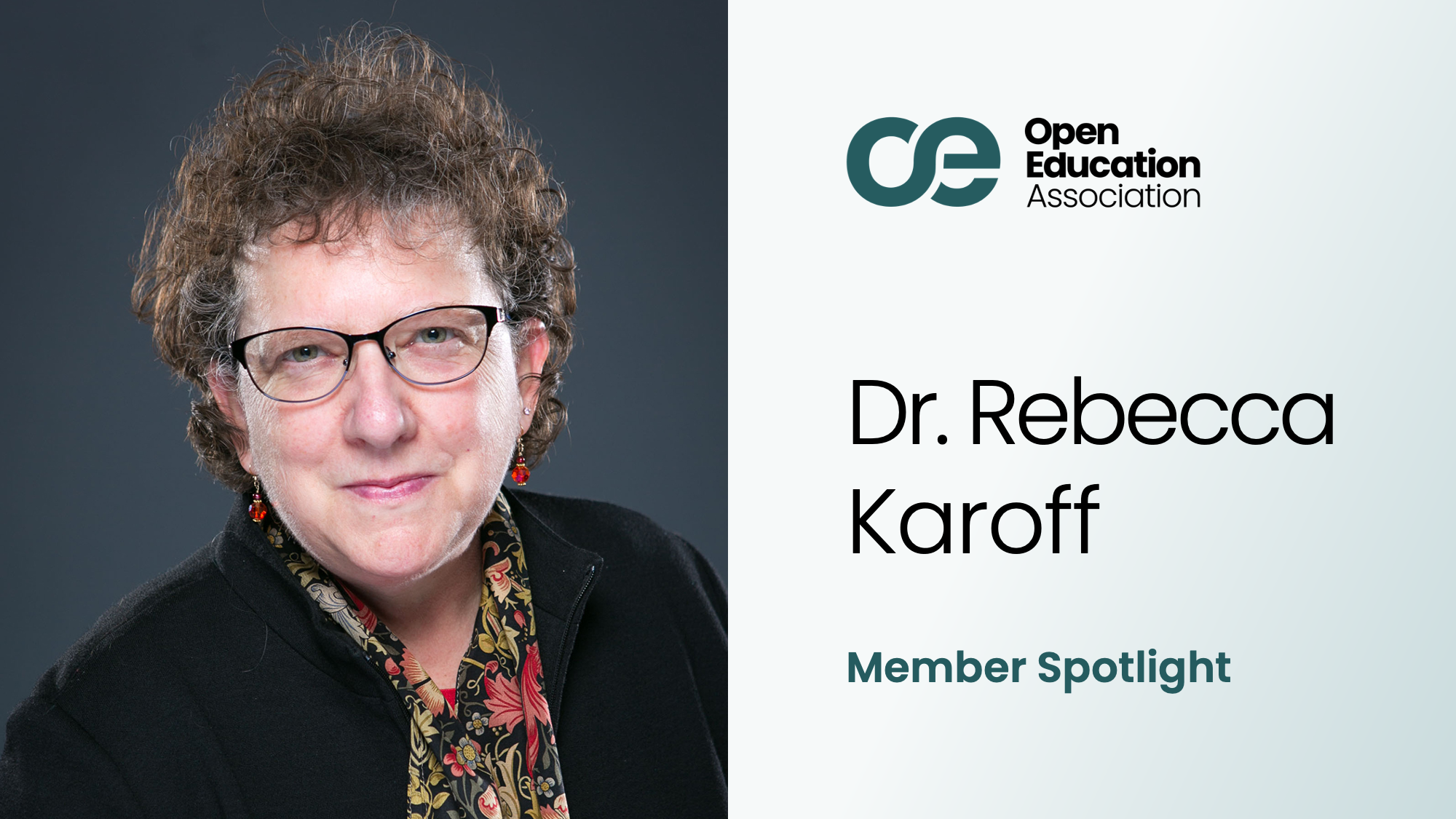
Member Spotlight: Rebecca Karoff

In open education, a University of Texas administrator finds a way to remove financial and academic barriers and build campus community all at once.

In open education, a University of Texas administrator finds a way to remove financial and academic barriers and build campus community all at once.

For Rebecca Karoff, who serves as Associate Vice Chancellor for Academic Affairs in the University of Texas System, tasked with removing barriers to student success and closing outcome gaps, open education is a vessel for the values that are central to how she works, leads, and collaborates.

Rebecca's path into open education began with library leaders in her system who understood that open education isn't just about free textbooks, but a worldwide movement with the capacity to remove financial and academic barriers and build campus community all at once. There wasn't a single lightning-strike moment of conversion, she says, but rather "a constellation of moments": the influence of passionate change-makers across her institutions, and early days working with other state and system leaders through DOERS.

Her email signature carries a line from Toni Morrison's Beloved: "Definitions belong to the definer, not the defined." For Rebecca, open education is inseparable from the project of meaning-making: ensuring that everyone gets the opportunity to define themselves and their own education, especially those at the margins.

What she wants now, in the next five years, is for more high-level institutional leaders to own open education work: to name it, claim it, fund it, and commit time and people to it. "This is our work, too," she says, "not just the work of librarians, instructional designers, faculty champions." She's fighting for the elevation of open from the margins to a systemic practice, where shared responsibility and barrier-breaking are central.


Want to share your story or nominate someone else? Complete the form.

Read More
Newsletter Dani Nicholson Newsletter Dani Nicholson

February Newsletter: Happy Open Education Week

Happy Open Education Week! This month’s newsletter offers updates on resources for OER accessibility, policy updates, and upcoming association events.


Happy Open Education Week!

March 2-6th is international Open Education Week when people around the globe will celebrate the simple but transformative idea that knowledge is meant to be shared. Whether you practice open education in your classroom, create open resources to share, or support knowledge sharing systems, this week is about you!

Here are some ways to get involved:


Accessibility, Title II & OER

As the deadline for compliance with Title II digital accessibility requirements approaches this April, conversations about OER and accessibility have increased on campus. While accessibility should always be a priority, now is an especially important time to underscore the strong connection between open and accessibility. Our programming this month focused on supporting open education advocates to help separate myths from facts.

New Resource: OER Accessibility

Visit our OER Accessibility Resources page for the recording of our recent webinar, a live calendar of upcoming accessibility events, and a curated list of accessibility resources.


Flash Poll: Webinar Topics

What kind of programming do you want to see from the association? Take 30 seconds to share what’s on your wishlist: skills you want to learn, guidance you need, information you want, or experts you want to hear from.  


Federal Open Textbook Pilot Funding

Congress has renewed funding for the Open Textbook Pilot in 2026, allocating $7 million for grants to support the creation and use of open textbooks. Past grantees range from Wisconsin’s Open RN to Washington’s Open ProfTech to Louisiana’s Interactive OER for Dual Enrollment.

While it is difficult to predict how recent changes at the Department of Education will impact the grant process and timeline, applications have historically opened in late spring/early summer under the program’s established priorities and definitions.  

The Open Education Association has joined efforts led by SPARC and the Student PIRGs to advocate for more funding in 2027 and will share updates on opportunities to apply.


Policy Spotlight: Connecticut

Connecticut's OER Coordinating Council has built a sustained infrastructure for open education through faculty grant programs, statewide summits, and a growing body of impact data. To date, that work has saved more than 10,000 students nearly $1.2 million in textbook costs, with the potential for millions more, according to a new statewide report. Despite this strong track record, the council is operating with only half of its original budget. The Open Education Association joined state advocates in submitting testimony to the Appropriations Committee calling for full funding restoration, so the council can build on its demonstrated impact for students.  


Member Profiles

Each month we’ll highlight Open Education Association members and what drives their work. Want to be featured? Share your story.

Tiffani Tijerina

Dr. Tiffani Tijerina

When Tiffani handed her students a free book, it immediately set the culture of her classroom: informal, open, light-hearted. She realized that open education could make a difference in more than just her students' wallets. Read More

Bob Awkward

Dr. Robert Awkward

As a community college professor, Bob saw withdrawals in his economics course drop to zero after replacing a $225 textbook. Now, as a state leader, he’s scaling that impact across institutions to save students millions. Read More


Upcoming Events

In addition to our list of upcoming events, check our conference list and webinar calendar for more offered by the community.

OpenEd26 Call for Proposals

The 2026 Open Education Conference will be held as a virtual event on Oct. 27-29 with the theme The Space Between. Proposals for sessions and contributed papers (new!) are due Friday, April 3View Call for Proposals.

OpenEd25 Keynote Rewatch: Dr. Kim Hunter Reed
🎥 Wed, March 4, 2:00 PM ET • Public

OpenEd25 Keynote Rewatch: adrienne maree brown
🎥 Thu, March 5, 3:00 PM ET • Public

Information Session: Open Education Association
📝 Tue, March 10, 2026 3:00 PM ET • Public

Last Chance to Join! MemberWorking Group Meetings:


Thanks for reading. We’ll be back next month with more updates and opportunities. 

Not a member yet? Learn moreAlready a member? Here’s where to start.

Read More
News Nicole Allen News Nicole Allen

Maintaining Momentum for OER in Connecticut

As the state legislature considers next year’s budget, advocates urge full restoration of funding for the Connecticut OER Coordinating Council. Since its founding, the Council has saved more than 10,000 students nearly $1.2 million in textbook costs.

Connecticut has taken a deliberate approach to building open education capacity at scale. Through the Connecticut Open Educational Resources Coordinating Council, established by the legislature in 2019, the state has created a sustained infrastructure for open education that spans faculty grant programs, professional development, statewide summits, and a growing body of data on how OER is being used across its colleges and universities.

The results are striking. To date, the Council's work has saved more than 10,000 students nearly $1.2 million in textbook costs, a return of more than five dollars for every state dollar invested in grants. And that figure likely understates the full impact: only about 7 percent of high-impact course sections at Connecticut institutions are currently using OER, meaning the potential for student savings is far greater than what has been realized so far. The Council estimates that if OER were used across all high-impact sections, students could save an estimated $37 million annually.

Connecticut OER advocate holding up signs

Kristi Newgarden (left), Instructional Designer at Charter Oak State College and Aura Lippincott (right), Instructional Designer at Western Connecticut State University at last year’s CT OER Summit.

How much of that potential is realized depends on continued state investment. Connecticut eliminated its OER funding entirely in FY2024, and while a partial restoration of $50,000 annually has allowed core activities to resume, it remains half of the Council’s previous level.

With the FY2027 state budget now under consideration, the Open Education Association joined state leaders in submitting testimony to the Appropriations Committee on February 19th, making the case that the program's track record warrants a return to full funding.

The demand is there. A recent state survey found that the greatest area of need is incentives for faculty — exactly what the Council's grant program provides. The Council had already received 27 applications for its current grant cycle, and anticipates fully expending its available funds. More resources would mean more grants, more courses converted to OER, and more students with access to free course materials.

Beyond the grant program, the Council continues to advance the field in other ways. It recently published a Model OER Policy that colleges and universities across the state can adapt, developed resources on automatic textbook billing to help institutions navigate that landscape, and hosts an annual CT OER Summit that brings together faculty, librarians, administrators, and students from across the state.

The Open Education Association will participate in the 2026 CT OER Summit on March 13th and looks forward to connecting with the Connecticut community. If you're attending, we hope to see you there.


Read More
Member Spotlight Dani Nicholson Member Spotlight Dani Nicholson

Member Spotlight: Tiffani Tijerina

A University of Arkansas at Little Rock professor finds that open education can reshape classroom culture, not just cut costs.

A University of Arkansas at Little Rock professor finds that open education can reshape classroom culture, not just cut costs.

Sometimes you can tell everything you need to know about a classroom from its syllabus. In fall 2017, Dr. Tiffani Tijerina handed her students a free textbook called “Sexy Technical Communication.” Her students loved the title. “It helped break down the wall between student and instructor,” says Tiffani. And because the textbook was open, students could dive into learning the ins and outs of technical communication right away: no wait, no paywalls. 

Before the semester started, she'd been advised to keep a professional front, and only let her students call her ‘Professor.’ “With that initial response to the textbook, I quickly realized that that advice was simply not me,” she says. The textbook that made her students laugh, not perform professional distance — that was her style. "That's when I first realized that open education could make a difference in more than just my students' wallets,” says Tiffani. Of course, students left raving reviews about not having to buy a textbook. “But it was the informal and open tone the textbook set for the class that really showed me the power of the customized learning that open education can offer.” OER opened up pedagogical possibilities, she found; students who felt comfortable were students who asked questions, stayed engaged, and absorbed new information easily. 

Now an Assistant Professor of Rhetoric and Writing at the University of Arkansas at Little Rock, Tiffani has made open education the center of her professional life. "Honestly, open education kind of IS my value," she says. "I've been doing this work for my entire professional career; it's embedded into everything I do in and out of the classroom." 

“My guiding principle is access,” she says. "That's what it all comes down to." What she wants to see in the next five years: more external funding and recognition opportunities for individuals and small teams, especially at institutions without the infrastructure to support compensated open education work. There needs to be more ways for people to do this work, she says, not just more institutional recognition that the work exists. Access isn't just for students. It's for educators, too.


Want to share your story or nominate someone else? Complete the form.

Read More
Member Spotlight Dani Nicholson Member Spotlight Dani Nicholson

Member Spotlight: Robert Awkward

A community college economics professor turned state leader watched withdrawals drop to zero when he left behind the $225 textbook.

A community college economics professor turned state leader watched withdrawals drop to zero when he left behind the $225 textbook.

For years, Dr. Robert Awkward taught Principles of Macroeconomics at a community college using a Cengage textbook that cost students $225. It was excellent. His students still failed at alarming rates: six out of twenty-five withdrawing each semester, grades middling at best. "I know students cannot afford the high cost of textbooks as it often comes out of pocket," Bob says. "And this is combined with students' challenges with housing, food, and healthcare." The $225 wasn't just expensive. It was prohibitive.

The switch to a low-cost textbook rewrote the equation. Withdrawal rates dropped to zero, and grades improved. Bob did the savings math: "$200 per student x 25 students per course x three semesters. That is $15,000 in one year from one faculty member that keeps repeating year after year!" And, most strikingly, something pedagogical had shifted in the students’ final reflection papers. "Their ability to write properly about macroeconomic concepts, theories and principles, AND to apply them to their life as a consumer, employee and voter has significantly improved," says Bob. 

Now, as Assistant Commissioner for Academic Effectiveness at the Massachusetts Department of Higher Education, Bob leads a statewide initiative for OER, working with representatives across the state to deepen the use of no- and low-cost textbooks through professional development and education. When the first statewide results came in, he was stunned: $7.6 million saved in FY22, based on only seventeen of twenty-eight institutions reporting. “I had no idea it would be that much savings,” he says. And that was just the seedling. “It has only gone up exponentially since then.” In the most recent data from FY24, student savings reached $21.5 million! 

His hope for the field is that open education becomes recognized as a discipline, and as a pedagogy. Bob's vision goes beyond savings. “It will change how faculty teach, how they design their courses, and engage students to become co-creators of knowledge.” It’s the logical extension of Bob’s simple guiding principle: "Knowledge grows when we share it."


Want to share your story or nominate someone else? Complete the form.

Read More
News Nicole Allen News Nicole Allen

Open Textbook Pilot Grant Program Funded for 2026

Congress renewed funding for the federal Open Textbook Pilot program in Fiscal Year 2026, allocating $7 million for new grants to be distributed by the Department of Education.

Congress has renewed funding for the Open Textbook Pilot in Fiscal Year 2026, allocating $7 million to be distributed by the U.S. Department of Education. The Open Textbook Pilot is a federal grant program that supports the creation and expanded use of open textbooks to save college students money and improve learning outcomes. Since 2018, it has invested $54 million in grants projected to save students more than $250 million—a nearly fivefold return on taxpayer investment.

The program is championed by Senator Dick Durbin (D-IL) and Representative Joe Neguse (D-CO), with advocacy led by SPARC and the Student PIRGs. "With the rising cost of tuition, many students decline to purchase required textbooks for their coursework due to the outrageous expense," said Senator Durbin in a press release celebrating the funding. "Open textbooks are a proven way to save students money while providing quality instructional materials."

Past projects funded by the Open Textbook Pilot include:

A group of open education advocates stand around Senator Durbin at the U.S. Capitol

Open education advocates meet with Senator Dick Durbin (center) in 2019 to discuss the impact of the Open Textbook Pilot grant program.

  • Open RN (Wisconsin), which was originally funded to develop five open nursing textbooks, and has since expanded to include a wide range of openly-licensed texts, simulations, and virtual reality scenario plans. 

  • Open ProfTech (Washington), which is developing high-quality open textbooks for the in-demand professional and technical programs such as welding, hospitality, and criminal justice. 

  • Interactive OER for Dual Enrollment (Louisiana), which leverages free OER and interactive quiz and assessment elements to enhance postsecondary opportunities for high school students across the state and nationally. 

For those interested in applying for the 2026 funding cycle, applications have typically opened in late spring or early summer. However, the program is subject to a new interagency agreement between the Departments of Education and Labor, so it is difficult to predict this year’s process and timeline. Under the program’s existing requirements, grants range from $500,000 to $2 million and must be submitted by a consortium of at least three higher education institutions. Projects should focus on student success, use of technology, and filling gaps in the open textbook landscape.

The Open Textbook Pilot must be renewed by Congress annually. To permanently authorize the program, lawmakers have proposed the Affordable College Textbook Act, a bill that would also strengthen textbook transparency requirements and increase student protections. While Congress is not slated to take up major higher education reforms this year, passing this bill remains a top priority for the open education field. 

For news about the Open Textbook Pilot, watch the Federal Register and sign up for our newsletter for more updates.

Read More
Digest Gabby Hernandez Digest Gabby Hernandez

OpenEd Digest – February 2026

This month’s roundup of open education news, opportunities and events.
OpenEd Digest

your monthly roundup of what’s new in open education

Introducing our new look! After 10 years and 200 editions, the OER Digest has become the OpenEd Digest. Monthly editions will be delivered from digest@opened.org and get posted online. Please take a moment to confirm your email settings and share this message with anyone who may be interested.


Upcoming Events

Curated picks from our lists of upcoming webinars and conferences

Upcoming Webinars:

Call for Proposals:

Last Chance Registration:

Save the Date:

  • The 2026 Open Education Conference (OpenEd26) will be held on October 27-29, 2026 as a fully virtual event with attendance welcomed from across the globe. A call for proposals will be released in late February. Help spread the word and sign up for updates to stay informed.

  • The 2026 MI OER Conference will take place on Friday, November 13 at Washtenaw Community College in Ann Arbor. Additional details will be posted to the MI OER Network website and the call for proposals will open in April.


Open Opportunities

Highlights from our open education opportunity board

Share the Love: Share your love for OER this Valentine's Day and Open Education Week by joining Colorado in thanking instructors for using OER in their class, recognizing those who support open education on campus.

Open Calls:

Open Education Week Programming:


Stories from the Field

Snapshots of open education making a difference

From Florida: University of Central Florida’s Affordable Instructional Materials initiative held its seventh annual awards ceremony to recognize professors championing open educational resources and low-cost course materials. The program has saved students over $50 million since 2019, with 76.5% of course sections in 2025 using free or low-cost materials. Read More>>

From Montana: Tony Hartshorn, an associate professor at Montana State University's College of Agriculture, received the Excellence in Open Education Award for his pioneering work in developing open-access educational resources. Through a 2021 grant, Hartshorn authored an open-access textbook for his Soils course, demonstrating how faculty can leverage open educational resources to provide accessible, customized learning materials. Read More>>


Hot Off the Press

Newly-published resources to explore and share

Report: Fixing the Broken Textbook Market is Student PIRGs’ new research on open textbooks, access codes, and autobilling. Read the report to learn about the growing number of professors taking cost into account and how that progress is being undermined by various publisher practices that reduce student choice.

Report: The Midwestern Higher Education Compact and the Southern Regional Education Board released new reports Using Open Educational Resources (OER) in Dual Enrollment: Stakeholder Perspectives and Dual Enrollment and Open Educational Resources: Intersections and Opportunities in State Policy. These reports explore how OER are being used in dual enrollment and where state policy can better align to expand impact.


Got suggestions for our next edition?

Read More
News Gabby Hernandez News Gabby Hernandez

Accessibility, Title II and Open Education

As the deadline approaches for Title II digital accessibility requirements, it’s an important time to get grounded in how open education supports accessibility—and remember that the goal is supporting every learner.

In April 2024, the U.S. Department of Justice issued final regulations under Title II of the ADA establishing digital accessibility requirements that apply to public colleges and universities. As the compliance deadline for many institutions approaches this April, campuses are actively reviewing the accessibility of their websites, digital services, and instructional materials.

As part of these accessibility reviews, some campuses are encountering questions about open educational resources. Some involve the practical work of evaluating and remediating locally-created materials. Others reflect misconceptions about OER and the Title II requirements, even when many OER meet required standards and open licensing provides substantial flexibility to make improvements.

The compliance deadline matters, but this moment is really about recognizing that accessibility is not optional—it is foundational to full participation in education. The Open Education Association has collected the following resources to help practitioners navigate compliance questions while highlighting open education as a pathway toward greater accessibility.

Webinar on OER and Title II Accessibility Compliance

To support practitioners navigating Title II accessibility compliance and emerging questions about OER, the Open Education Association organized OER and Title II Accessibility Compliance: Separating Myths from Facts. This webinar clarifies what the new requirements mean in practice, addresses common misconceptions, and explores how to advocate for OER for greater accessibility in teaching and learning. 

This post has been updated with the recording of the webinar, which was held on February 17, 2026.

More Learning Opportunities

With the increased attention on this issue, we have created a special view of our main community webinar calendar showing upcoming accessibility-related learning opportunities.

Accessibility Webinar Calendar | opened.org

Accessibility has always been part of open education’s promise: learning materials that can be adapted and improved to better meet learners’ needs. As institutions move toward compliance, this is an opportunity to center access from the start.

Read More
News Nicole Allen News Nicole Allen

Open Education Week: Join a Global Celebration of Openness

The Open Education Association provides an overview of Open Education Week and provides some simple ways to engage.

Every year, educators, librarians, students, and advocates around the world come together for Open Education Week — a shared moment to celebrate what’s possible when education is more affordable, adaptable, and participatory.

Coordinated by Open Education Global, Open Education Week is a community-led tradition that highlights open educational resources, open pedagogy, and broader efforts to remove barriers to knowledge and learning. Open Education Week has been held annually since 2012, with activities taking place across institutions, regions, and countries. It is not a single conference or centralized program. Instead, it is a distributed celebration shaped by the community itself.

This year, the Open Education Association is honored to participate in Open Education Week for the first time as a new community space for connection, coordination, and shared learning. Here are 3 simple ways to engage.

1. Visit the OE Global Open Education Week Hub

If you’re looking for planning tools, inspiration, or ways to share what you’re doing, OE Global maintains an excellent set of official resources, including the OE Week Handbook and the community calendar.

2. Join or Share the Open Education Association’s Programming

To support Open Education Week 2026, the Open Education Association is offering a set of public sessions and resources that are designed to supplement your local or campus Open Education Week programming.

  • Getting Started with Open Education is a practical introduction resource for faculty, staff, and campus leaders who are new to open education or want to strengthen their foundation.

  • OpenEd25 Keynote Rewatch: Dr. Kim Hunter Reedwill be an informal virtual “rewatch” of New Horizons: Opening Doors and Transforming Lives Through Higher Ed in Louisiana, which discusses bold policy, innovation, and investments that expand access and affordability.

  • OpenEd25 Keynote Rewatch: adrienne maree brownwill be an informal virtual “rewatch” of a reflective conversation on transformation, imagination, and community care in open education.

3. Engage However You Can, Large or Small

One of the strengths of Open Education Week is that it reflects the many ways open education shows up across campuses, libraries, systems, and communities. In recent years, participation has included everything from statewide webinar series to campus celebrations, resource showcases, and global conversations.

When engaging in Open Education Week, participation is flexible and can be simple and meaningful, such as:

  • Attending a session or exploring the OE Week calendar

  • Hosting a small conversation with colleagues or students

  • Sharing a resource, project, or lesson learned

  • Amplifying the work of others in your community

If you’d like to offer an event, low-lift formats work especially well—coffee hours, faculty or librarian showcases, student panels, open pedagogy workshops, or informal idea exchanges, creating spaces to connect, share, and build momentum together. Whether you host an event, attend a session, share a resource, or simply start a conversation, your participation strengthens the movement.

We look forward to celebrating alongside you!

Read More
Newsletter Dani Nicholson Newsletter Dani Nicholson

January Newsletter: What’s Ahead for 2026

Welcome to the first newsletter from the Open Education Association! Every month we will share updates on projects, opportunities to get involved, and resources to support your work.

Welcome to the first newsletter from the Open Education Association! After officially launching last fall, the association is now welcoming members and building programs to support the field. This monthly newsletter will share updates on projects, opportunities to get involved, and resources to support your work.

Collage of open education community members

What’s Ahead in 2026

As a new national organization, the Open Education Association is focused on strengthening open education across the United States through coordination, advocacy, and collaborative action. This year, look out for:

  • Resources to help you stay informed and respond to change

  • Programming on timely topics and professional development support

  • Advocacy for open education funding, policy, and scholarly recognition

  • Coordination to develop shared goals and expand field-wide impact

  • Recognition for your work and opportunities to shape the association

To the 150+ practitioners and advocates across 35 states who have joined as members, thank you! And to everyone engaging with this work, we look forward to the year ahead.


Working Groups Start in February

Working groups will guide the association work in three key areas. Each group will hold an introductory session during the week of February 9th, then members can sign up for the group of their choice.


Policy Spotlight: Colorado

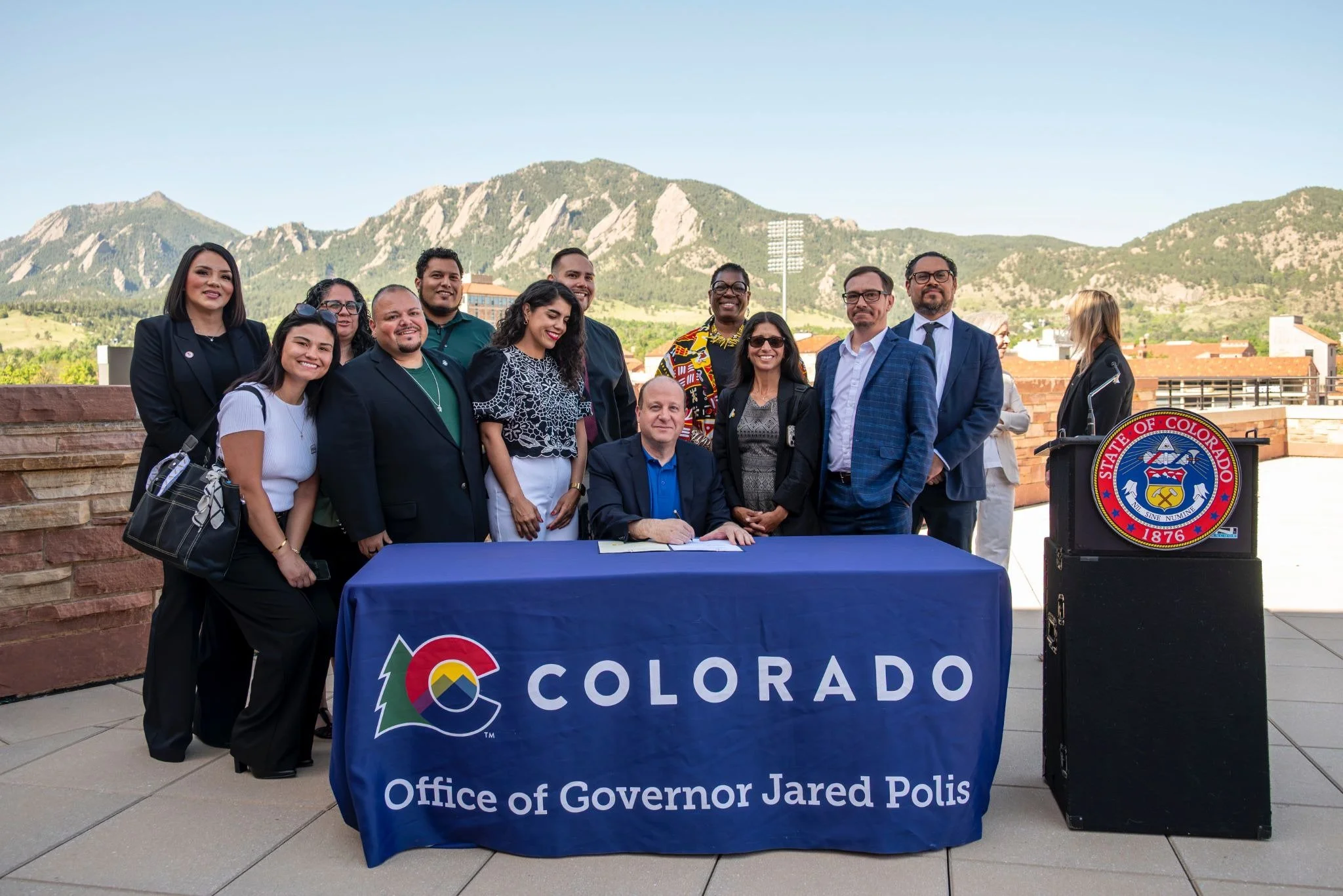
Colorado OER advocates at the state capitol

Photo (back to front): Brian Healy (MSU), Jon Dyhr (MSU), Caitlin Fine (MSU), Emily Ragan (MSU), Chealsye Bowley, (Colorado Dept. of Higher Ed, Mallory Reiswig (MSU student), Doug Watkins (Denver Public Schools)

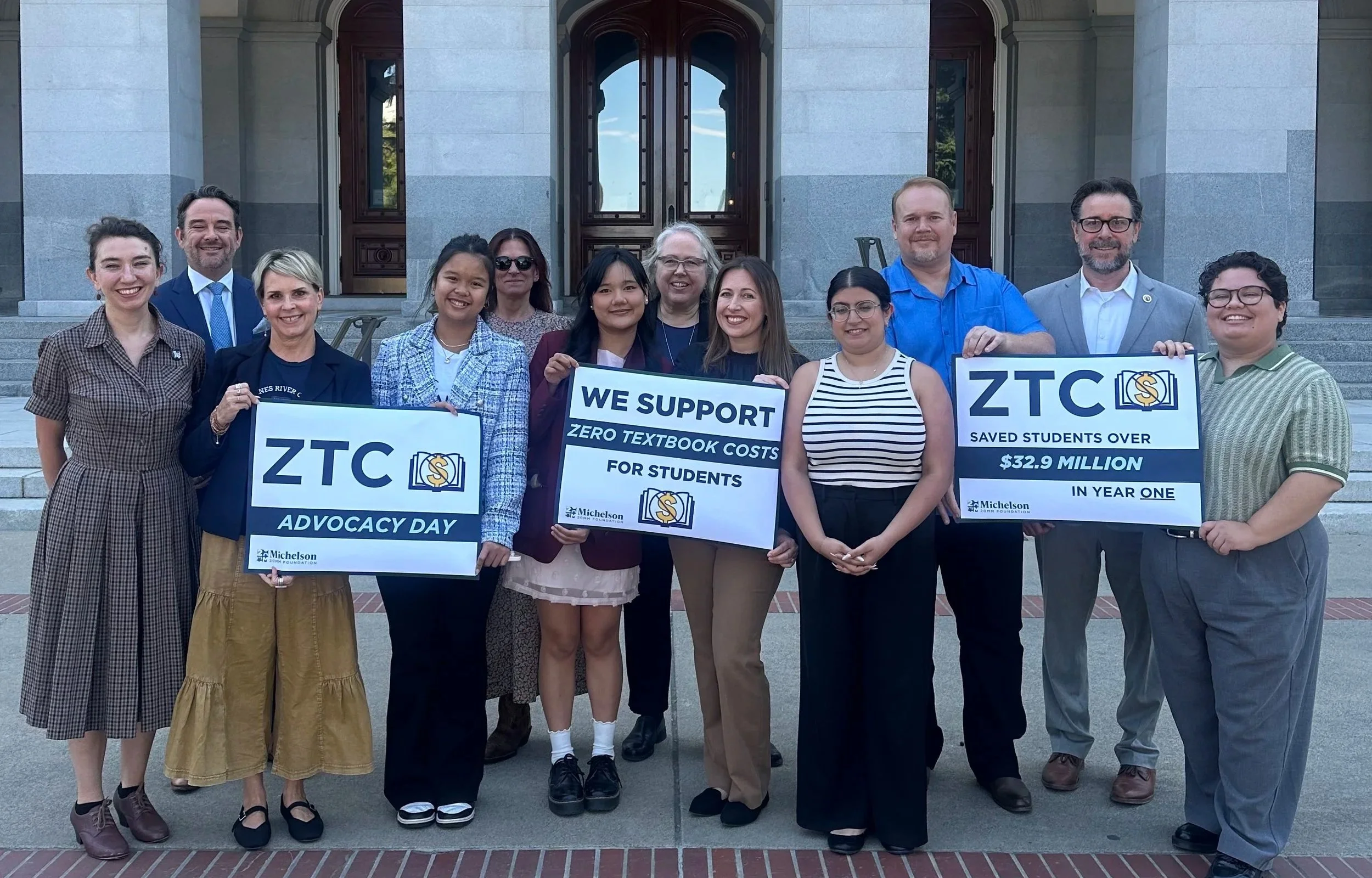
Colorado is considering legislation to renew funding for the state's highly-successful OER grant program. The program awards approximately $1 million annually to help faculty create and adopt openly licensed materials. Since its start, the program has converted more than 2,200 courses and built 17 zero-textbook-cost degree programs, saving students nearly $60 million—an 11-to-1 return on state investment.

HB 26-1016 was heard by the House Education Committee on January 29th. Thanks to testimony by open education advocates (pictured), lawmakers voted to advance the bill. The Open Education Association submitted a letter of support and will be actively tracking the bill's progress.


Latest Resource

We offer a range of popular, field-wide resources including a webinar calendar, opportunity board, and monthly digest. Check out our latest addition.

Open Education State-By-State

This list is a growing directory of state, system, and national-level open education efforts. See what is happening across the country and help fill in gaps in your state.


Member Profiles

Each month we’ll highlight Open Education Association members and what drives their work to advance teaching, learning and sharing knowledge.

Jeremy Larance

Dr. Jeremy Larance

Jeremy teaches British literature, composition, and comics studies at West Liberty University while demystifying copyright law for his colleagues. His mission is helping educators recognize the rights they already have. Read More

Allison Buckley

Allison never forgot the sticker shock of textbook costs after arriving at college. Now an OER specialist with the Southern Regional Education Board, she's expanding dual enrollment access so all students start from the same playing field. Read More

Megan Zara

Megan Zara

As the OER Librarian at the University of Texas at Arlington, Megan helps students avoid the kind of barriers she faced herself. Her work centers care and co-creation, asking: who gets to learn, and who decides what learning looks like? Read More


Upcoming Events

Open Education Week

March 2-6 is Open Education Week!

Visit the official website and check out our planning guide, which includes materials you can use to promote Open Education Association programming to your community.

Save the Date!

The 2026 Open Education Conference will be held on October 27-29, 2026 as a virtual event. Mark your calendar and sign up to be notified when the call for proposals opens.


Thanks for reading. We’ll be back next month with more updates and opportunities. In the meantime, you can stay connected on social media and our website.

Read More
News Nicole Allen News Nicole Allen

Colorado Considers Bill to Renew Leading OER Grant Program

If passed, the bill would extend funding at approximately $1 million annually. Since its inception, the program has converted more than 2,200 courses to OER, built 17 zero-textbook-cost degree programs, and saveed students nearly $60 million.

Pictured back to front: Brian Healy (MSU), Jon Dyhr (MSU), Caitlin Fine (MSU), Emily Ragan (MSU), Chealsye Bowley, (Colorado Dept. of Higher Ed.), Mallory Reiswig (MSU student), Doug Watkins (Denver Public Schools).

Lawmakers in Colorado have introduced legislation to renew the state's highly successful Open Educational Resources grant program for another five years. House Bill 26-1016 was heard by the House Education Committee on Thursday, January 29th. Thanks to strong testimony from open education advocates across the state, the committee voted to advance the bill to the next stage. The Open Education Association sent a letter of support in advance of the hearing and will monitor the bill’s progression.

Colorado's OER grant program has become a national model for state-level support of open education. The program awards approximately $1 million annually to public institutions across the state, helping faculty adopt, adapt, and create openly licensed educational materials that students can access without cost. Since the program began, Colorado institutions have converted more than 2,200 courses to use open educational resources, now serving over 176,000 students each year.

The results have been substantial. Students have saved nearly $60 million in textbook costs, representing an 11-to-1 return on state investment. But the program's impact goes beyond individual course savings. Colorado institutions have built 17 complete zero-textbook-cost degree programs in fields like nursing, mathematics, and business, with many more under development. Students can now earn entire credentials in workforce-critical areas without paying for textbooks.

If reauthorized, the program is projected to generate $48 million in student savings by 2031 and more than $110 million by 2035, according to the Colorado Department of Higher Education. These projections are based on the program's historical performance and the zero-textbook-cost programs currently under development.

The association's letter to the committee emphasizes Colorado's role as a national leader in open education and the importance of sustaining the infrastructure and momentum the state has built.

Read More
Member Spotlight Dani Nicholson Member Spotlight Dani Nicholson

Member Spotlight: Jeremy Larance

A West Liberty University English professor wants to help educators discover the power to revise and remix course materials for their students.

Jeremy Larance

A West Liberty University English professor wants to help educators discover the power to revise and remix course materials for their students.

Jeremy Larance teaches British literature, composition, comics studies, and sports literature at West Liberty University. This adventurous combination makes perfect sense once you know that he wrote his dissertation on the literature of cricket and how it depicts England’s gentleman, and has spent recent years studying how American superheroes shape our ideas about masculinity and heroism. Both caped crusaders and white-flanneled batsmen are cultural mythology in motion. 

Jeremy’s guiding principle comes from Samuel Beckett: "Ever tried. Ever failed. No matter. Try again. Fail again. Fail better." It's a philosophy that applies well to open education, a practice requiring innovation and a willingness to experiment and iterate. 

What troubles Jeremy is the persistence of a fundamental knowledge gap: for many faculty, there are still big unknowns about what 'open education' means and what you can do with it, he says.  His hope for the field is straightforward: deeper faculty education that gives educators the support, language, and frameworks to see open education as a shift in power and possibility. 

Luckily, Jeremy actually quite enjoys the nuances of copyright law. “I love finding ways to help faculty see how their teaching can improve by better understanding the rights they already have as educators and creators,” he says. The flexibility to share and adapt materials “are too often obscured by fear, misinformation about copyrights, or institutional habit rather than by the law itself.” 

To benefit from the principle of “failing better,” we first need to understand how much we’re free to try.


Want to share your story or nominate someone else? Complete the form.

Read More
Member Spotlight Dani Nicholson Member Spotlight Dani Nicholson

Member Spotlight: Allison Buckley

An OER program specialist wants to ensure the next gen of first-gen students has what they need from day one.

Allison Buckley

An OER program specialist wants to ensure the next gen of first-gen students has what they need from day one.

Allison Buckley arrived at college from rural Georgia carrying an optimism that would last about one week. She believed tuition covered the full cost of education. Then came the bookstore. "I'll never forget the sticker shock," she says. She found she needed "a separate small fortune just to purchase textbooks." While some of her classmates cracked open crisp new editions, Allison haunted the library stacks, using outdated versions of the books to study for exams. "In those moments,” she says, “it was hard not to feel like I was playing the game from the parking lot rather than standing at home plate with my colleagues."

The parking lot stays with you. It sharpens your vision, teaches you to spot barriers dressed up as standard practice. Allison’s favorite quote is from Maya Angelou: "I can be changed by what has happened to me. But, I refuse to be reduced by it." That refusal fuels her work now. As an OER program specialist with the Southern Regional Education Board, she expands open education capacity locally and nationally; she is particularly proud of her work collaborating with the Midwestern Higher Education Compact to bring OER into dual enrollment programs. Getting access to high-quality OER texts right away is a big boost for the students’ engagement, confidence, and success, she says. Watching it become more feasible for low-income and first-generation students to participate in dual enrollment crystallized it for her: this isn’t just theory. The work is making a tangible difference. 

What Allison loves most about the OER field is its collaborative heart, the way knowledge circulates freely as a default. “Even as a relative newcomer to the field, I’ve been met with nothing but open arms, resources, shared strategies, and genuine smiles from those who have led this work for decades,” she says. “It is refreshing to work alongside people who treat knowledge not as something to be guarded, but as a public good meant to be shared by everyone.”

In five years, she imagines sustainable funding and open education practices baked into strategic plans — especially for dual enrollment programs. But mostly, she imagines the learners: high school students testifying that open access "didn't just save them money, but opened doors they didn't know were there." In the meantime, she’ll keep chipping away at that parking lot: “Let’s make ‘playing from the home plate’ the standard for every student.”


Want to share your story or nominate someone else? Complete the form.

Read More
Member Spotlight Dani Nicholson Member Spotlight Dani Nicholson

Member Spotlight: Megan Zara

For UT Arlington’s Open Educational Resources Librarian, learning is about care and co-creation.

Megan Zara

For UT Arlington’s Open Educational Resources Librarian, learning is about care and co-creation.

For Megan Zara, open education is a story she’s been living long before she had the language to describe it. In first grade, she watched her mother volunteer in the classroom, pregnant and determined, while studying for the GED she never got to earn as a teenager. Years of homelessness, full-time work, and raising children cemented her mother’s belief that learning could be a lifeline. “That shaped me,” Megan says. “It taught me that people who are struggling deserve care, not judgment.”

Now the Open Educational Resources Librarian at the University of Texas at Arlington, Megan carries that inheritance into every corner of campus. As she searches out free and open learning resources for students, or helps faculty reimagine their courses through open pedagogy, she builds a bridge between the classroom and the broader community. Really, her job is about refusing the quiet cruelties higher education has normalized: students skipping meals to buy access codes, faculty feeling boxed into expensive systems, knowledge treated like a luxury good. Megan knows that world firsthand. “I am still being crushed by student debt,” she says. In college, she tried to go without books, bought them too late, paid full price too often, resold them for pennies. “I am going back into the fire to help others out.”

At UTA, Megan weaves the philosophical with the practical. Her anchor question is: “Who gets to learn, and who decides what learning looks like?” She loves the moment when an instructor realizes they’ve been doing open work all along, or when a student discovers that textbooks can be free, and that their ideas can shape a course. In those small shifts is a recalibration of power: learning as something co-created, not consumed.

Looking forward, Megan hopes the field stops treating OER as “free stuff” and starts seeing open education as a reimagining of relationships—supported by funding, protected faculty time, and acknowledgement of OER work as academic contribution. She envisions students as co-authors of courses that center cultural relevance and accessibility, explicitly connecting the work to movements for racial, economic and disability justice. “My dream is that, when people hear “open,” they immediately think about belonging, possibility, and shared power.” 


Want to share your story or nominate someone else? Complete the form.

Read More
Digest Gabby Hernandez Digest Gabby Hernandez

OpenEd Digest – January 2026

This month’s roundup of open education news, opportunities and events.

Your monthly digest of open education updates, opportunities, and reminders

The OpenEd Digest is beginning its next chapter as part of the Open Education Association. Along with a refreshed layout, the Digest will move to a four-week publication schedule beginning next month. While a few things may look different, you can continue to expect the same trusted updates from across the open education community. Feel free to use the digest sign-up form to update your email information. 

Upcoming Events

Curated picks from the Open Education Association’s Webinar Calendar and Conference List that relate to a national audience and are open for all.

UPCOMING WEBINARS:

CALL FOR PROPOSALS: The open education field has many opportunities to submit conference proposals and share the amazing work happening across the field. Below is a list of open call for proposals and their deadlines:

LAST CHANCE REGISTRATION:

Upcoming Opportunities

Curated picks from the Open Education Association’s Opportunity Board that relates to a national audience and are open for all.

CALL FOR PARTICIPATION: The DOERS Collaborative invites you to collaborate on an exciting new OER and Workforce Development project focused on building stronger, more inclusive learning pathways between education and industry. DOERS needs your input to develop an openly-licensed Playbook to help institutions, employers, and instructional designers collaborate more effectively. If you are available, sign up for an interest group.

ACCEPTING APPLICATIONS: The AtlanticOER Development Grant Program invites applications from educators and institutions in the Atlantic Region of Canada to support the adaptation, adoption, creation, and curation of open educational resources (OER). The program aims to increase equitable access to course materials for students enrolled in credit-bearing courses while strengthening regional collaboration in open education. Applications are due February 6, 2026.

CALL FOR AUTHORS: 

PEER REVIEW REQUESTS: 


Browse more connection opportunities in the regularly updated Open Education Conference List, Webinar Calendar, and Opportunity Board.

Stories from the Field

Quick snapshots of those making change on the ground level, and those impacted.

From Colorado: The Colorado House Bill 26-1016 Continuation of Open Educational Resources Program has been introduced to the Colorado General Assembly and is under consideration. This bill would extend the state OER program for 5 more years, if passed. Read More>>


From Texas: South Plains College (SPC) faculty are preparing for the Spring 2026 semester by innovating technical education with open educational resources and artificial intelligence. The Texas Higher Education Coordinating Board recently granted a 2025 Star Award to SPC for its strides in AI-augmented OER course redesign, an approach to education that the college continues to leverage this year. Read More>>

Hot Off the Press

Each edition highlights an interesting, new, openly-licensed resource, including research, guides, templates, podcasts, open textbooks and more!

OPEN TEXTBOOKS FROM MILNE OPEN TEXTBOOKS: 

  • The Future is Now: Empowering Society Through AI Literacy is a textbook that serves as a user-friendly guide to the “black box” of AI. It breaks down complex technical concepts—from machine learning and neural networks to large language models—making them accessible to students across all disciplines. This book empowers readers to move from passive consumers of technology to informed, active participants in the AI age.

  • The second edition of Interpersonal Communication: A Mindful Approach to Relationships is not available. This updated edition builds on the strengths of the first while incorporating important enhancements to reflect today’s communication landscape.

Reading List

Stay up to date on the latest trends in Open Education.


Have suggestions for the next edition? Let us know at oerdigest@gmail.com

The OpenEd Digest is a public newsletter distributed to a broad group of stakeholders across the higher education community. Subscribe here.

Read More
Resource Gabby Hernandez Resource Gabby Hernandez

New Resource: Open Education State-by-State List

This list provides a starting point for mapping state-level groups, programs, and initiatives that are advancing open education across the United States.

One of the large takeaways from our National Needs Assessment was that the open education field encompasses more people, projects, and resources than many of us realized. Institutional, system, and state efforts create rich opportunities for connection, and the association can help link this work to national initiatives.

To begin building a broader understanding of open education activities across all 50 states, we are launching a new resource: the Open Education State-by-State List. This list represents a starting point for mapping state-based activity in the field, and we expect it to grow and strengthen with community input. Your contributions will help us build a more complete picture of who is engaging with epen education work across states and systems.

Know of a group we should include? Email contact@opened.org or share it through our suggestion box. Also, don’t forget to check out our other lists and resources.

Read More
News Aishah Abdullah News Aishah Abdullah

OpenEd25 Panel: Navigating Open Education’s Path Forward

Members of the Open Education Association steering committee engaged OpenEd25 attendees in a strategic discussion about how open education can respond to emerging challenges—individually, in communities, and collectively through national efforts.

Members of the Open Education Association Steering Committee participated in a panel at the 2025 Open Education Conference (OpenEd25) titled Navigating Open Education’s Path Forward in the U.S. Political Landscape.

The session recognized that as U.S. higher education faces rapid changes, now is a critical time to reassert open education’s role in this evolving landscape. It started by acknowledging some of the major topics the field is confronting—from institutional funding cuts to the ever-growing focus on AI to automatic textbook billing programs that co-opt open education's strongest arguments. The session then engaged the audience in a strategic discussion via Padlet about the dynamics of the current environment and how open education can strategically respond—individually, in communities, and collectively through a national effort.

It is worth noting that the two-year process that culminated in the launch of the Open Education Association was sparked at a session about the future of open education advocacy at OpenEd23. We look forward to digging deeper into the wealth of feedback and ideas generated at this session to help guide the association’s inaugural year.

The session recording and Padlet are now available, and we welcome the community to keep contributing.

Read More
News Nicole Allen News Nicole Allen

Moving Forward as the Open Education Association

The Open Education Association Development Project has officially become the Open Education Association. Join us at the Open Education Conference to learn more.

As the open education community prepares to gather for the Open Education Conference, we’re excited to share that the Open Education Association Development Project has officially become the Open Education Association. This marks a key milestone in the collective work to deepen coordination and connection across the open education field.

The idea for a national association first emerged two years ago during a session at the 2023 Open Education Conference, which sparked conversations about how to increase alignment and shared strategy. What began as a collaboration between DOERS, SPARC, and the regional interstate higher education compacts (MHEC, NEBHE, SREB, and WICHE) was later formalized as the Open Education Association Development Project with support from the William and Flora Hewlett Foundation. Through this process, hundreds of people contributed ideas and input through webinars, working sessions, and community consultations. The project has now transitioned into the Open Education Association, with its steering committee joining as the very first members.

With this transition, the Open Education Association begins its work as a national organization dedicated to strengthening and connecting the open education field. It exists to help the community work more effectively together—linking people, ideas, and initiatives to create the systems that sustain open sharing over time.

The association will make its debut at the Open Education Conference, where we’ll begin welcoming members. If you’re attending, stop by our sponsor table to learn more and consider being among the first to join.

In the coming weeks, we’ll share more about the association’s plans and structure, leading up to an official celebration of its launch at the first annual member meeting on December 3 at 3:00 p.m. ET. Register here.

We extend our gratitude to everyone who contributed their time, ideas, and energy to help shape this work—and to all who will join in building the Open Education Association into a strong, sustainable national voice for open education in the years to come.

Read More
News Guest User News Guest User

Project History: National Coordination on Open Education

As the Open Education Association Development Project nears the end of its development phase, this post documents more than two years of collaborative efforts that shaped the Open Education Association.

The Open Education Association Development Project is nearing the end of its development phase and will soon become the Open Education Association. The launch of a national association for open education in the U.S. builds on more than two decades of progress in the open education movement, shaped by the collective work of hundreds of people across the community. It is also the result of a two-year collaborative process that started with an idea thrown out during a conference session. This post documents how that effort took shape and led to the creation of the Open Education Association.

November 2023 — Future Directions for Open Education Advocacy

The idea of a national association for open education first emerged during a session at the 2023 Open Education Conference. Participants reflected on the progress the field had made and the challenges that remained—such as sustaining funding, advancing supportive policies, and strengthening coordination across states and institutions. The discussion generated interest in connecting these efforts more effectively at the national level.

February-March 2024 — Do We Need a National Open Education Strategy? An “Open” Conversation

To continue the conversation, DOERS, SPARC, and the regional interstate higher education compacts (MHEC, NEBHE, SREB, and WICHE) co-hosted a national discussion series that examined the need for a national strategy. These sessions underscored that the open education movement is united by openness as a shared approach, as opposed to any single common goal. Therefore, what was most needed was not one central plan, but stronger coordination among existing efforts.

May 2024 — How Might We Improve National Coordination on Open Education Advocacy?

Building on those insights, the group convened a workshop at the Hewlett Foundation’s education grantee meeting focused on strategic coordination in open education. Guided by objectives drawn from community input, participants mapped current initiatives and identified opportunities where national collaboration could add value.

September 2024 — National Coordination on Open Education: A Community Conversation Series 

Over that summer, the group of organizations was invited by the Hewlett Foundation to develop a proposal for next steps. They collaboratively formed an interim steering committee to guide the process and organized another national conversation series to gather additional community input on a proposed structure for the work.

October 2024 — Proposal for National Coordination on Open Education

Drawing from those discussions, the interim steering committee released a public proposal outlining the mission, objectives, and guiding principles for a grant-funded coordination project. SPARC was selected to submit and administer the grant if approved.

February 2025 — Announcing Next Steps on U.S. National Coordination on Open Education

At the end of 2024, the Hewlett Foundation awarded the grant to support national coordination on open education in the U.S. In early 2025, the project formally launched as the Open Education Association Development Project. A new steering committee was appointed, and work began on a national needs assessment and field mapping effort.

July 2025 — National Needs Assessment Survey Results

With responses from more than 1,000 participants across all 50 states and over 100 interviews, the findings revealed a strong and connected community. Respondents identified several areas where greater coordination and shared infrastructure could strengthen existing work and broaden impact.

August-September 2025 — Working Sessions

With a clearer sense of direction, the project hosted a series of open working sessions to shape plans for association membership, the first year of activities, and organizational structure. Discussions also focused on sustainability and how to balance the importance of membership dues with keeping participation accessible.

That brings us to today. As we prepare to remove “Development Project” from the initiative’s name and begin operating as the Open Education Association, it stands as a community-built effort grounded in shared goals and collaboration. Its foundation reflects the collective input of the open education community, and its next chapter will continue to be guided by those it serves.

Want to be among the first to join the Open Education Association? Sign up for updates

Read More
News Aishah Abdullah News Aishah Abdullah

Project Update: September 2025

With the fall semester in full swing, we are excited to share the latest developments from the Open Education Association Development Project as we prepare to launch the association.

Note: This post was published while the Open Education Association was operating as the Open Education Association Development Project. Read more about the association’s evolution.

With the fall semester underway, the Open Education Association Development Project is gearing up for its next phase. Over the summer, we shared the results of our national needs assessment, which defined the gaps and priorities the association needs to fill. We also held a series of open working sessions that helped shape our initial plans for membership, programming, and resources.

On September 30th, we invite you to join a final working session to review our plans to move forward with launching the association.

📝 Working Session: Final Review of Association Development

📅 September 30th, 3:00 PM ET / 12:00 PM PT

Read on for more updates, and be on the lookout for an invitation next month to officially join the association as one of its first members!

What have we done over the last month?

  • Published the highly-requested Open Education: Getting Started Guide, which provides a starting point for practitioners to find useful resources in core areas of Open Education practice.

  • Hosted a series of open working sessions on membership, programming, curated tools & resources, and branding.

  • Met with organizations and community members to gather additional input on our plans and strategy. Want to connect? We’d love to meet with you!

What are we working on now?

  • Preparing to officially found the Open Education Association and begin accepting individual members. Join our final working session on September 30th to share input and learn more.

  • Developing a website and updated branding based on input from last month’s working session. Missed the chance to weigh in? Share your input here.

  • Getting ready for OpenEd25, which we’re supporting as a top-level sponsor. If you’re attending, we hope you’ll stop by our booth, and also don’t miss our hybrid panel on the future of open education in the U.S.

Further Reading

Read More