Report Confirms What Students Already Know: The Textbook Market Is Broken
College students have been sounding the alarm about textbook costs for more than a decade. The Student Public Interest Research Groups (Student PIRGs) surveyed more than 4,000 students across 107 campuses in 25 states in fall 2025 to find out where things stand. Their new report, Fixing the Broken Textbooks Market: Fourth Edition, documents real costs to students and makes a compelling case for why open educational resources matter.
Access codes make students pay to complete their homework
For years, the main concern about course materials was price. While physical textbooks cost too much, students could at least shop around through used copies, rentals, and library reserves.
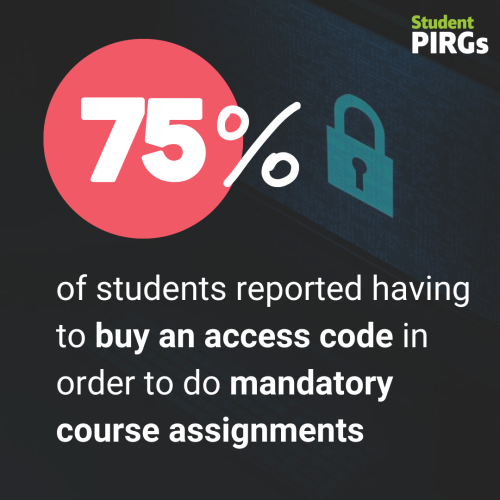
According to the report, that flexibility is disappearing as publishers have shifted to access codes: short-term digital licenses that come bundled with course materials. Three-quarters (75%) of students surveyed reported taking at least one course where they had to purchase one.
Unlike textbooks, access codes cannot be borrowed or shared, and they have become the price of admission for homework, quizzes, and graded assignments. The problem is no longer about whether students can afford the material — it's whether they can afford to complete their schoolwork at all.
Automatic billing programs charge students without their consent
Access codes aren't the only mechanism reshaping how students pay for course materials. Many campuses now use automatic textbook billing programs that charge students for course materials through their tuition bill by default. About half of the campuses in the survey use some form of this arrangement, either campuswide or course-by-course.
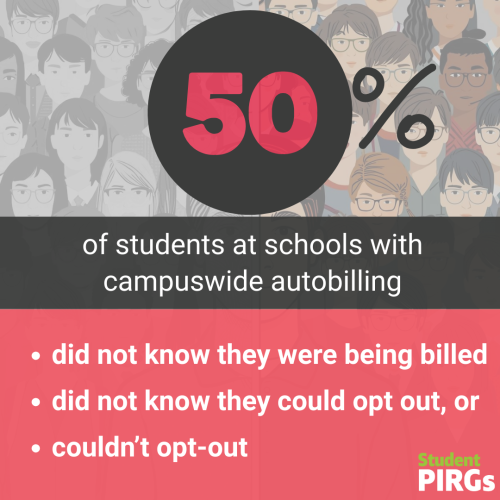
At schools with campuswide automatic billing, 50% of students either didn't know they were being charged, didn't know they could opt out, or didn't want to be enrolled. At schools with course-level billing, that figure rose to 68%. These programs claim to offer better value, but the data suggest students may not have a choice.
The real-world consequences are serious
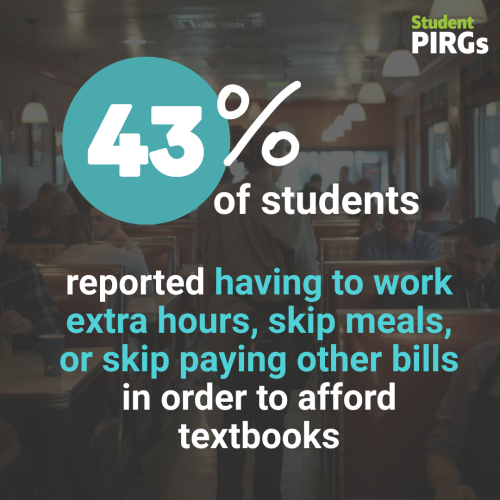
The financial and academic stakes are clear. Over two-thirds (70%) of students reported skipping the purchase of a required course material at some point due to cost, the highest rate across all four editions of this report. More than a third (38%) said course material costs drove decisions about which courses to take, which materials to prioritize, and in some cases whether to stay enrolled at all. About a third (32.5%) said the costs forced them to work extra hours, skip meals, or delay paying bills.
Those tradeoffs have consequences. Students who reported skipping meals to pay for course materials were five times more likely to have failed a class because they couldn't afford required materials. The students already under the most financial pressure are also the most likely to pay for it academically.
OER are making a difference
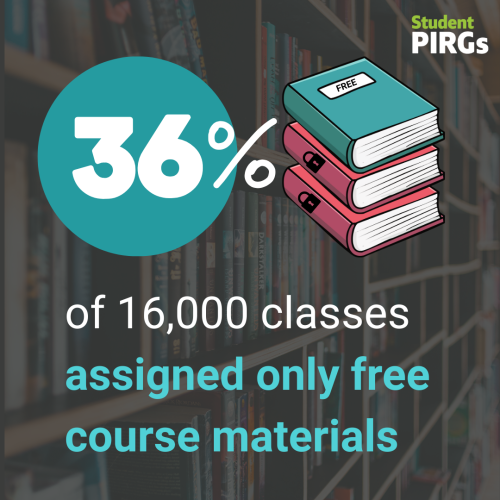
The report also has bright spots. Students said that 36% of their classes assigned only free materials, a meaningful share that reflects years of investment in open education across the field. Where faculty have made the switch, students are seeing the benefit directly.
The evidence from state and institutional programs reinforces this. Colorado's OER grant program is estimated to have saved students more than $50 million in textbook costs. Georgia's Affordable Learning Georgia program has funded more than 700 projects. These results show that when institutions invest in the infrastructure to support faculty, open education delivers at scale.
For anyone making the case for open education at their institution, this report is useful evidence. The textbook affordability crisis isn't a perception problem or an anecdote. It's documented, measurable, and solvable.
The full report is available at studentpirgs.org.
Images in this post are reproduced from the Student PIRGs website.