
Member Spotlight: Emily Ragan
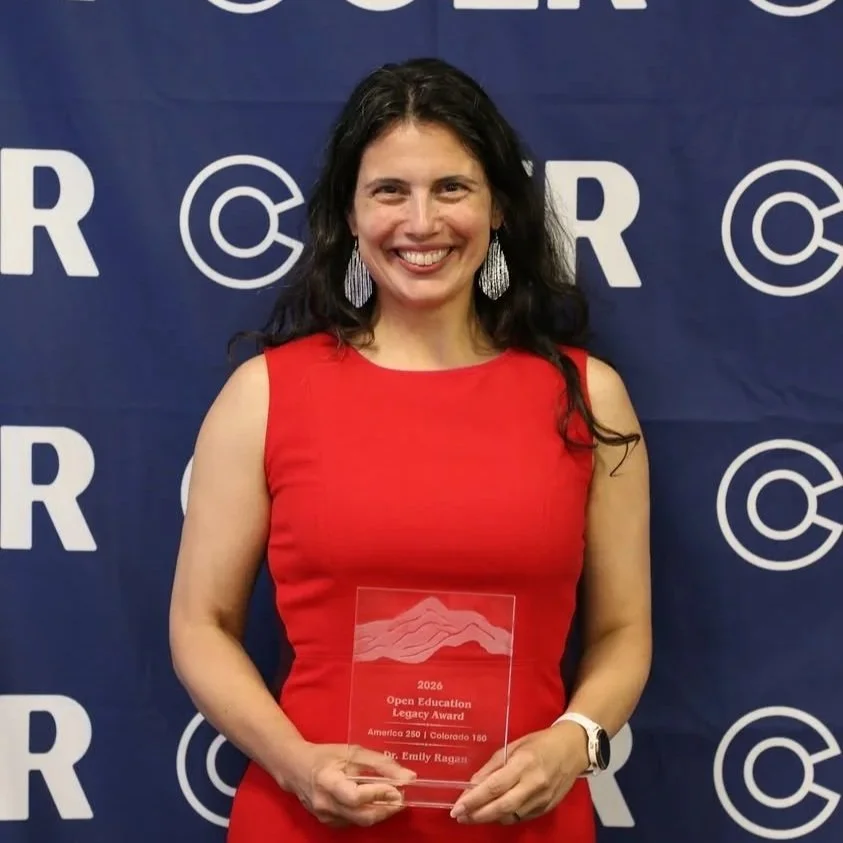
Emily Ragan was “tricked” into trying OER by a practical argument, then discovered a pedagogical paradigm shift.
Emily Ragan jokes that she was tricked into using OER. In her second year teaching chemistry at MSU Denver, an instructional designer named Alex McDaniel was helping her build an online section of General Chemistry I. Alex's pitch for OER was practical: why spend a bunch of time incorporating publisher materials into the learning management system only to have to redo everything when the department switched textbooks?
“What Alex taught me was a paradigm shift: to focus on learning objectives and outcomes first, resources second,” says Emily. “This model is valuable because it helps faculty step away from using a specific book or resource to teach the course and to reconnect with the underlying course objectives.”
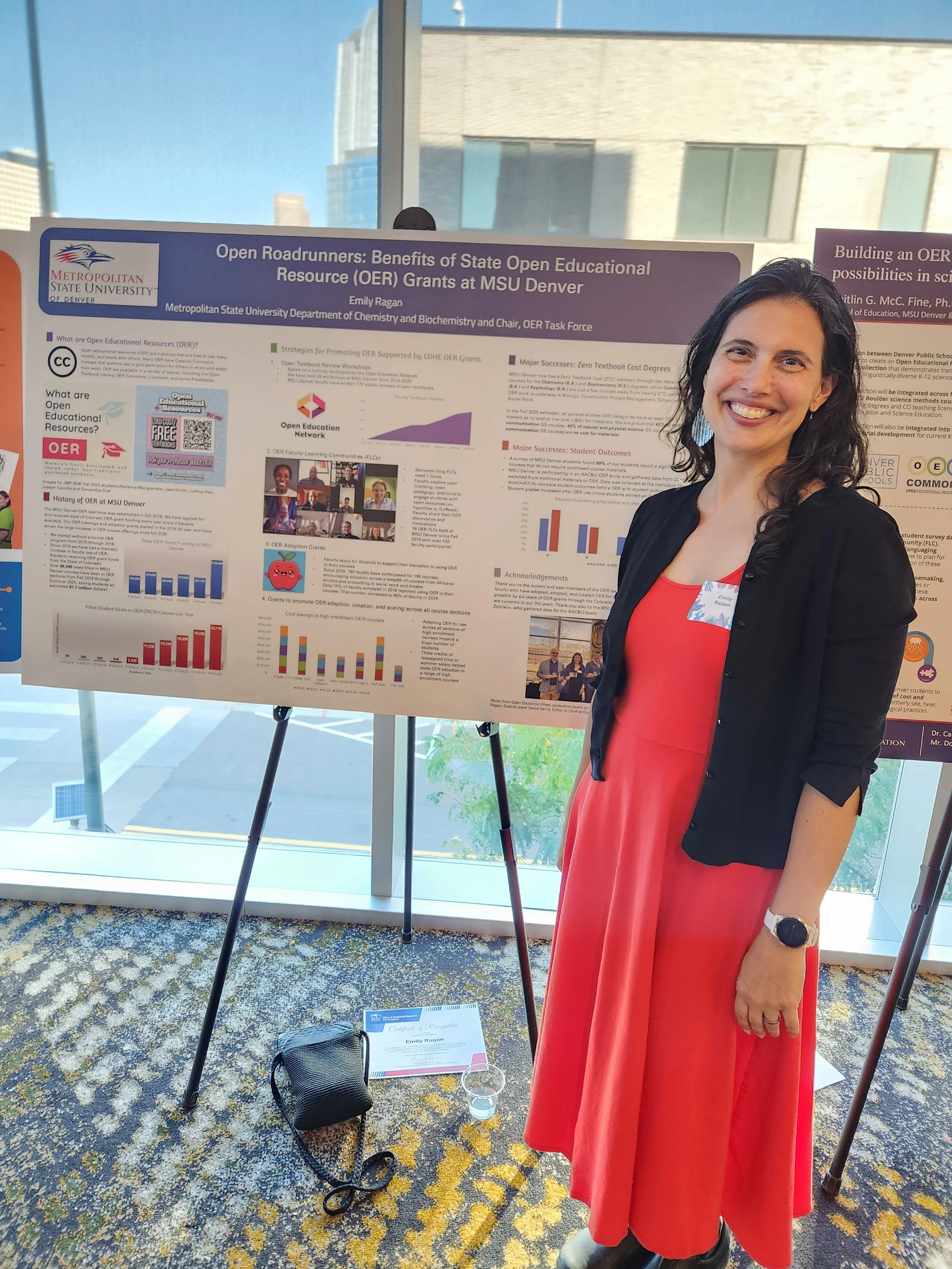
“From the beginning, I knew my students were benefiting from having all the required material provided in the Learning Management System for free,” says Emily. A few years later, her thinking on OER expanded: “My epiphany while serving on the Colorado OER council in 2017 was that so many more students had the potential to benefit, but more faculty needed to know about OER and how they might use them,” she says.
In the OER community, she found the human core of the movement, an oral tradition far older than licensing policy. “I met Deb Keyek-Franssen for coffee outside of a council meeting, and she asked me, ‘What’s your OER story?’” says Emily. “She listened as I told her, and she encouraged me: ‘That’s an important OER story; you should share it.’ I now realize that sharing my OER story became the beginning of my OER advocacy.”
"It is a very human experience to learn from each other," Emily says. Long before she knew what open licensing was, she was benefiting from colleagues passing along slides, worksheets, and old assessments. "Open licensing (and the internet!) allows that sharing to happen at a much larger scale." It’s new infrastructure for the ancient impulse to show others what you know.
Emily now chairs the MSU Denver OER Taskforce and serves as a first-year student success faculty fellow. She wants to see more openly licensed materials built around active learning, and she's watching the AI question carefully, hopeful that the field can weigh its costs and benefits clearly. “I hope we can continue to support human learning and human well-being,” she says. “We don't know what the limits to our growth are; so much is possible.”
Want to share your story or nominate someone else? Complete the form.