
Member Spotlight: Victoria Brame
A first-gen student who gamified her way through textbook costs grew up to ask: how do we make sure the next student isn't navigating this alone?
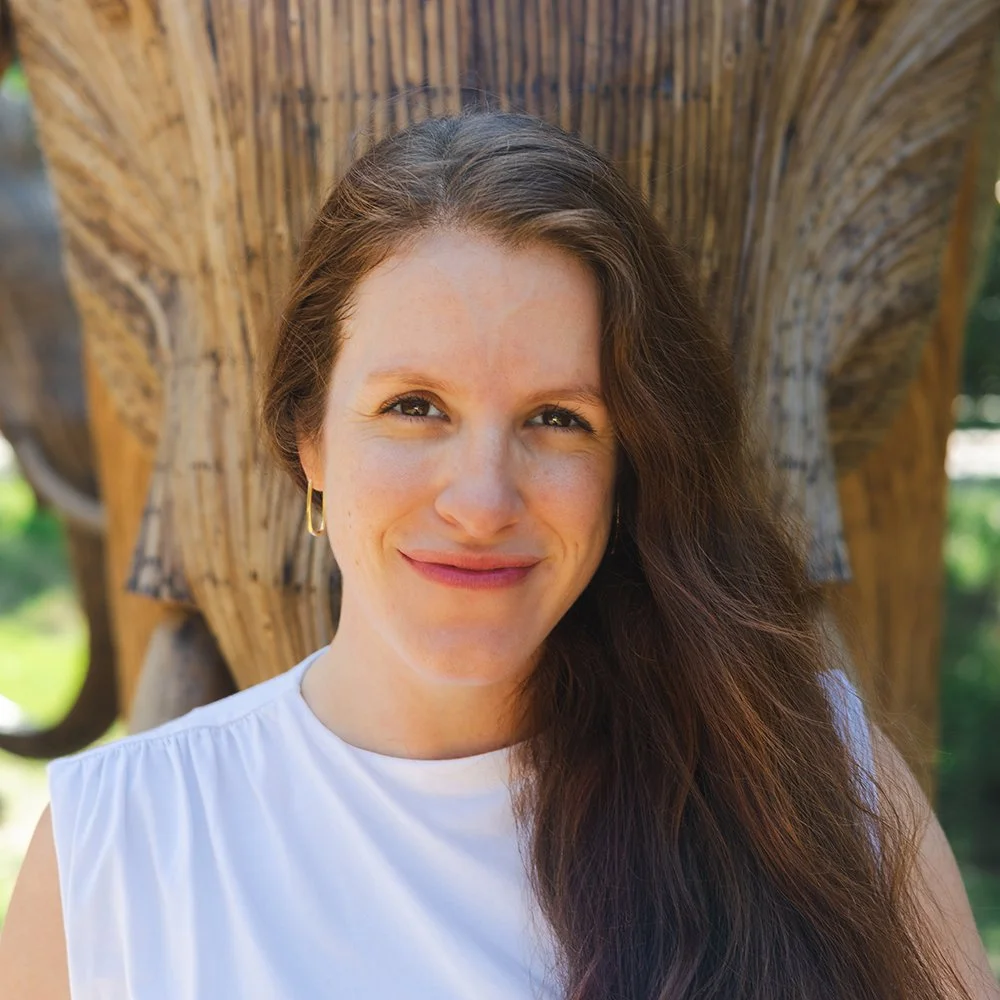
As a first-generation college student, Victoria Brame ran the textbook gauntlet every semester: checking library reserves first, then shared copies with friends, then whatever she could find online, and buying new only when there was no other option. "I gamified my way through," she says.
Years later, working as a magnet coordinator with early college high school students, she saw the same exhausting calculations still playing out, sucking up time and energy that could have gone toward learning. “I watched students put in the work to enter college as juniors and then still struggle with the cost of textbooks on top of rent, groceries, and basic self-care,” she says. When Victoria learned about open education during her MLS program, her connection with the field’s strategies and goals was immediate.
Now, as Marketing and Communications Manager for The Rebus Foundation, Victoria helps connect educators and learners with the tools, training, and people that make open work possible. "I believe knowledge and learning tools should be available to anyone who needs them, not gated by price or platform," she says. "That belief started with my own experience as a student and grew every time I sat across from a student who was choosing between a textbook and groceries.” In a library display, Victoria once invited students to respond to the prompt: "Instead of textbooks, I could've bought…" The wall filled up with scribbled necessities: rent, medical bills, diapers, groceries, gas to get to class. "The flood of responses told the real story."
Victoria comes back to a particular question: "How do we make sure the next student isn't navigating this alone, when so many of us already know how to help?" Part of her answer is about how far the principles of open can actually reach. Over the next five years, Victoria hopes the field continues its shift from open resources to open as a cultural default, a practice that “lives in formal classrooms and well beyond them (e.g., voter guides, tenant rights resources, workforce tools, and the resources someone reaches for to learn on their own).”
She also wants the field to engage with AI as a tool rather than fear it, while staying clear-eyed about the questions we always need to ask: “who holds learner data, who profits from it, and whose voices get smoothed over when the dominant tools are trained on a slice of the world that doesn't speak for everyone.” Those questions will only be well answered when open values are built into the infrastructure itself rather than bolted on afterward. "The next chapter has to be about what we build, own, and care for together," she says: "local-first tools and platforms designed for the public good that protect learner privacy and keep knowledge accessible."
But her guiding principle keeps her grounded in the work underneath the big vision, the unglamorous, collective labor that actually makes the movement possible. "Real labor and care lie behind every freely available resource. What keeps me going is watching this community find ways to make it work anyway, trusting that small, sustained acts of openness add up.”
Want to share your story or nominate someone else? Complete the form.