Idaho Adopts Strengthened Course Material Affordability Policy
The Idaho State Board of Education adopted a revised version of Policy III.U. on Instructional Material Access and Affordability on June 18. The update strengthens protections for students around automatic textbook charges and student data and reinforces the state's support for open educational resources.
Idaho's instructional materials policy was already among the strongest in the country, and the revision sharpens its provisions to address how the course materials market has evolved. As textbook companies have shifted from selling print textbooks toward programs that automatically bill students through their tuition and fees, it raises questions that existing policies aren’t equipped to answer. Can students see what the materials cost before they register? Can they decline the charge and still get access to materials that the course requires? Idaho's updated policy answers these questions.
For any state reviewing its own course materials access and affordability policies, Idaho’s policy offers a strong model. Its provisions include:
Course marking requirements that ensures students are shown the full cost of their materials, including any automatic charges, at the time of registration
A clear definition of automatic charges that separates them from tuition and makes them visible to students
Opt-out protections that require institutions to explain how students can decline an automatic charge and still obtain comparable materials, consistent with federal policy
Safeguard language that keeps automatic-charge programs from discouraging faculty from adopting open educational resources and other lower-cost materials
A prohibition on third-party providers from selling or otherwise using student data for purposes not related to instruction
Support and recognition for faculty who adopt, adapt, and create open educational resources, including encouragement for institutions to count that work toward tenure and promotion
Together these provisions treat affordability as a question of both price and information. Students get a clear view of what they will pay and a real choice about how to pay it, and faculty keep the freedom to choose the materials best for their students.
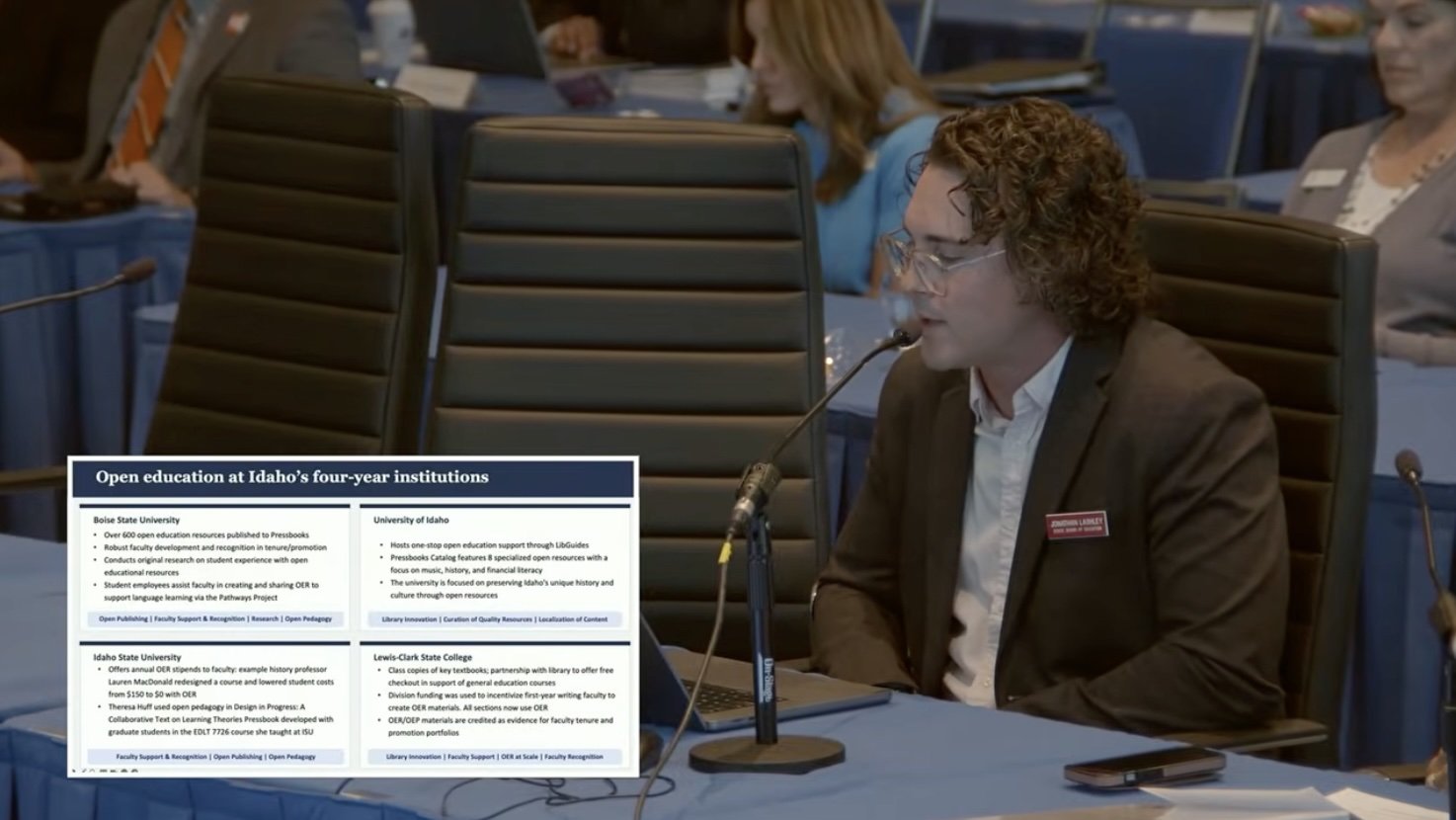
Deputy Chief Academic Officer Dr. Jonathan Lashley presents to the Idaho State Board of Education on statewide open education efforts.
The revised policy supports Idaho’s leading statewide efforts to expand the access and affordability of instructional materials. Across the state, institutions have built zero-textbook-cost degree pathways that let students earn full credentials without buying a required textbook, in fields from automation engineering to general studies. Faculty across the system are adopting open materials and writing their own, including resources their students help build. The state’s 2026 report on open education documents the savings and access this work has produced for students statewide.
The Open Education Association submitted a letter supporting the revised policy ahead of its adoption. Idaho's policy stands as a model other states can look to as they work to protect students in a changing course materials market.