
Member Spotlight: Delmar Larsen
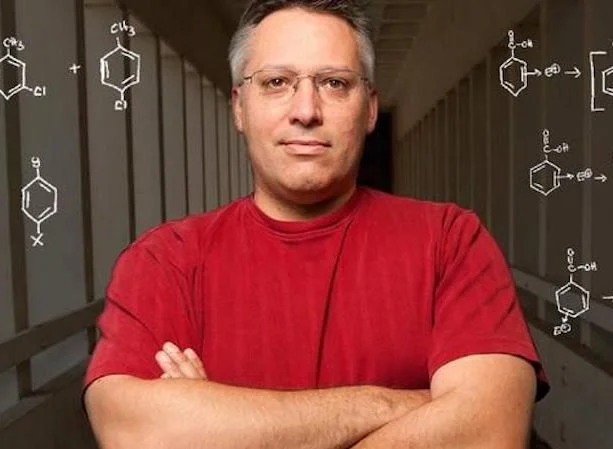
The UC Davis chemistry professor and LibreTexts founder heard about a student who had to choose between a textbook and baby food, and spent the next decade building the alternative.
Every semester, Delmar Larsen watched his chemistry students at UC Davis run the same, unassigned calculation: whether buying the textbook was worth it. “Year after year, I watched students attempt to succeed in a course without the resources they needed simply because the cost was too high,” he says. "The traditional publishing model was creating unnecessary obstacles to learning."
So, he began experimenting with openly accessible course content: in 2008 he created a resource called ChemWiki, LibreTexts in its fledgling form. This was before there were big statistics about student outcomes and dollars saved. “What showed me the real impact of OER were the personal stories,” he says. One came from a colleague's office hours: a faculty member who had adopted ChemWiki told him about a student who had described having to choose between buying a course textbook or buying baby food for her child. "Hearing that was a gut punch," Delmar says. "It made the issue very real: for some students, textbook costs aren't just inconvenient—they force impossible choices."
Delmar’s effort to eliminate those impossible choices in his own classroom extended into a global platform where over 3,000 books are freely available to anyone. “The goal was simple but transformative,” he says: “to build a living library of open educational resources that empowers educators, reduces costs for students, and expands access to knowledge worldwide.” Today, as a professor of chemistry and CEO of LibreTexts, that vision is his full-time work.
"As a faculty member at a public institution and someone who received most of my own education at public institutions, my core belief is that students are not a market to exploit,” he says. Every dollar spent on an unnecessarily expensive textbook is a dollar that could have gone toward food, housing, or other basic needs. "Open education offers a different model that is built on access, collaboration, and public good rather than profit."
LibreTexts carries, in its architecture, a piece of everyone who improved it. Faculty tested early versions of ChemWiki in their classrooms, improved the content, and proved that open materials could hold up; students and educators contributed feedback, corrections, and new material. "In many ways," Delmar says, "the journey of LibreTexts reflects the open education community itself: a network of educators, students, and institutions working together to make knowledge more accessible."
Looking forward, he wants open education to stop thinking of itself as a cheaper version of the textbook and become something beyond. "Open educational resources should not simply replicate traditional textbooks in digital form," he says. "Instead, they should evolve into dynamic learning environments where content, data, and technology work together to improve both teaching and learning."
A resonant quote comes from Newton: "If I have seen further, it is by standing on the shoulders of giants." Delmar finds that it captures the spirit of science and open education both.
Want to share your story or nominate someone else? Complete the form.