Open Advocates Make the Case for ZTC Degrees in Sacramento
Earlier this month, a delegation of California Community College students, faculty, and administrators spent a day in Sacramento highlighting the impact of the state’s Zero Textbook Cost (ZTC) Degree Grant Program. The group, led by the Michelson 20MM Foundation in partnership with the Chancellor's Office of the California Community Colleges, met with seven legislative offices directly and shared localized data on the impact of ZTC programs with more than thirty more. Sen. Jesse Arreguín introduced a resolution on the Senate Floor recognizing the program's first-year results.
California’s ZTC Degree Grant Program was signed into law by Governor Gavin Newsom in 2021 backed by a landmark $115 million state investment. The funding supports colleges in building entire degree and certificate pathways that students can finish without buying a single textbook. The program’s goal is to reduce the overall cost of education and help students complete degrees faster.
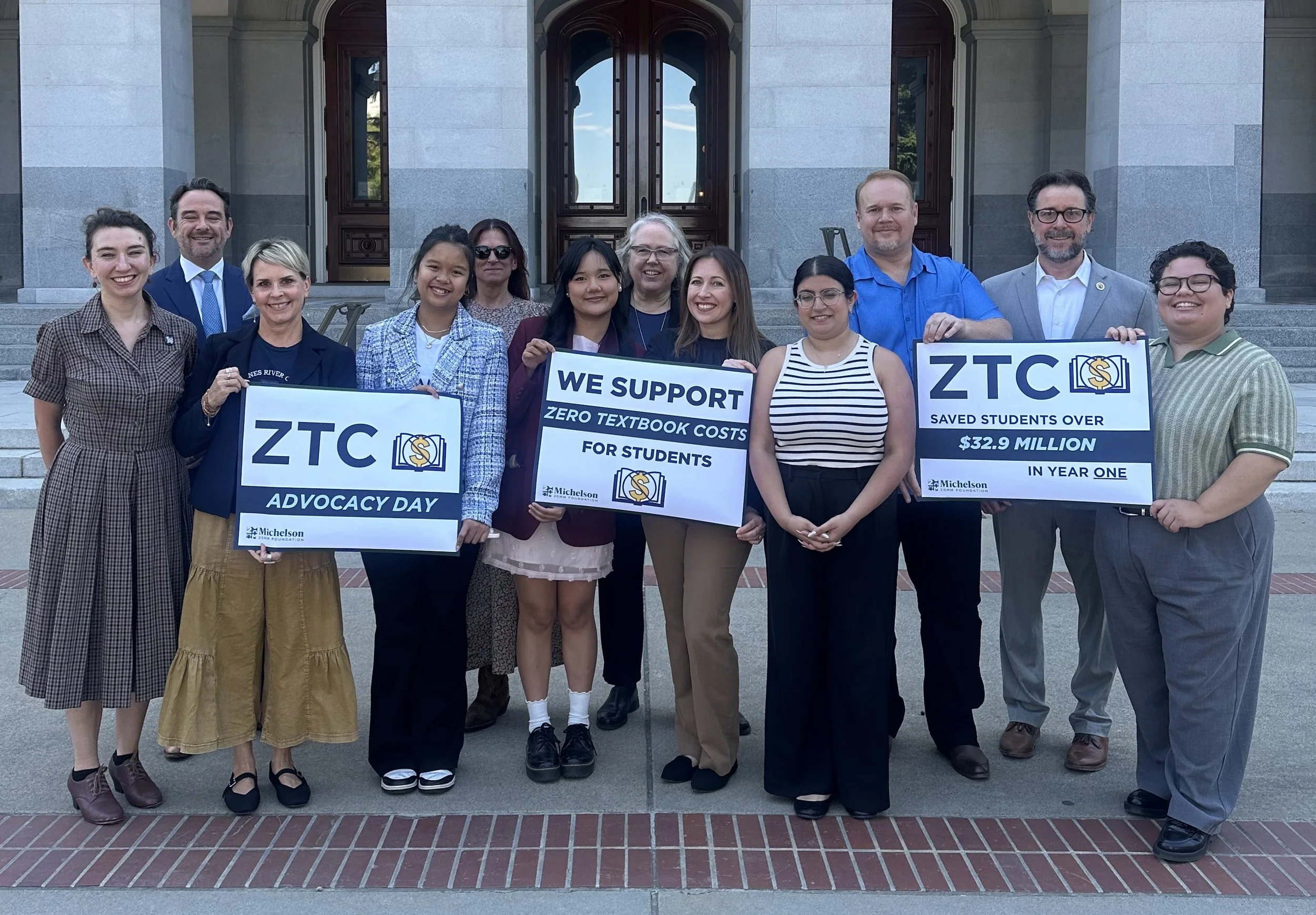
Student leaders, faculty, and California Community Colleges system administrators — including multiple Open Education Association members — met with legislative staff in Sacramento to share district-level ZTC savings data.
A new Student Textbook Affordability Snapshot found that California's Zero Textbook Cost Degree Grant Program saved community college students an estimated $32.9 million in the 2024-25 academic year, across more than 11,500 grant-funded course sections. The delegation translated that statewide figure into district-level data for each office they visited, turning a single number into something a legislator could connect to their own constituents.
The group included three student leaders, two faculty members, a college trustee, a vice chancellor from the California Community Colleges system, and a vice chancellor from a community college district, alongside the program's ZTC administrator. For several of the students and faculty, it was their first time walking the halls of the Capitol to advocate directly for a policy that affects their education.
The ZTC program builds on results from an earlier pilot that returned more than 700% on its initial investment. Advocates estimate that fully scaling ZTC pathways could save California students up to $800 million over time.
The program is in its last year of state funding, with renewal needed next year for it to continue. The evidence makes a strong case for that investment.The Open Education Association plans to join California advocates in making the case for renewing this program, recognizing the proven impact ZTC degrees can have for students.